Organic vs. Inorganic Mulch: What Actually Works in Rock Hill’s Clay Soil
Last updated: 31 August 2026
For Rock Hill’s clay soil, organic mulch (wood chips, bark, pine straw) is the better long-term choice, since it breaks down and actually improves the soil structure underneath it. Inorganic mulch (gravel, rubber, landscape rock) never decomposes, so it never does anything to fix the drainage and compaction problems clay soil already has.
I get this question a lot from homeowners standing in the mulch aisle, staring at bagged rock and bagged bark side by side, trying to figure out which one is worth the money. The honest answer depends on what your soil actually needs, not just which one looks tidier on day one. It’s the same question we walk homeowners through every day as part of the lawn and landscape care we provide across Rock Hill.
Organic Mulch: What It Actually Does to Clay Over Time
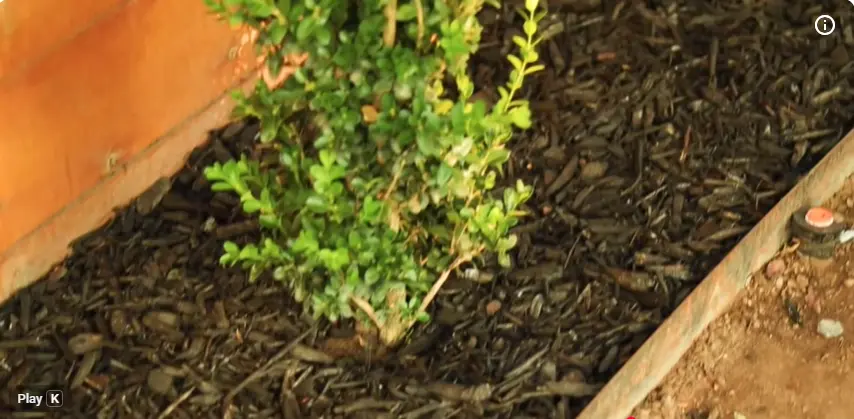
Organic mulch is anything that was once alive: wood chips, shredded bark, pine straw, leaves. As it breaks down, that material doesn’t just disappear, it becomes part of the soil underneath it, contributing organic matter and nutrients back into the ground it’s covering.
That decomposition process matters more here than it would in sandy or loamy soil. Rock Hill sits on Cecil and Pacolet series clay, the same red clay that runs through the broader Piedmont region of the Carolinas. This soil is dense, drains slowly, and compacts easily, which is exactly what organic matter counteracts. Clemson’s own research on mulch confirms the mechanism: as the material breaks down and works into the ground below it, that organic matter becomes part of the topsoil itself, feeding nutrients back into the soil in the process. The Morton Arboretum’s research on mulch and clay soil adds another piece to this: mulch helps prevent cracking in clay soil, and those cracks are a real problem, since they increase water loss and break plant roots as the soil shifts.
There’s also a measurable cooling effect. A Michigan State University Extension study found that organic mulch can regulate soil temperature by as much as 18°F at midday compared to bare soil. In a Rock Hill summer, when clay soil already bakes hard in the heat, that’s a meaningful buffer for root systems trying to stay cool.
Inorganic Mulch: Why It Doesn’t Fix Anything Underneath It
Inorganic mulch includes gravel, pebbles, crushed stone, and rubber. None of it breaks down, which is exactly the point for some homeowners: less maintenance, no annual top-off. But that same permanence is the problem for clay soil specifically.
Since inorganic mulch never decomposes, it never adds organic matter to the ground beneath it. Clay stays exactly as compacted and slow-draining as it started. Clemson’s guidance adds another practical downside for our climate: light-colored rock mulch bounces sunlight back up rather than absorbing it, and the ground around it runs noticeably hotter through the summer months as a result, the opposite of what you want during a Rock Hill summer.
There’s a secondary issue too, and it’s actually covered in the same Clemson factsheet cited above. Rock mulch is often installed over plastic sheeting for extra weed control, and Clemson’s guidance on plastic under mulch is specific about the risk: it blocks rainfall and air from reaching the soil, and if moisture does get trapped below that barrier, it can create anaerobic conditions that promote root rot in nearby shrubs.
None of this means rock mulch is never appropriate. It has a place in permanent, non-planted areas like walkways or foundation borders. It’s just not doing your clay soil any favors in a planting bed.
Why This Distinction Matters More in Rock Hill Than Elsewhere
If your yard were sitting on sandy, well-drained soil, the organic-versus-inorganic choice would mostly come down to aesthetics and budget. Rock Hill’s clay changes that calculation. Cecil and Pacolet clay soils are well-documented in York County soil surveys as slow-draining, compaction-prone profiles, the kind of ground where a hard rain either pools on the surface or takes its time working through.
Organic mulch is one of the few low-effort ways homeowners actually improve that soil over the years without tilling in amendments by hand every season. Every layer that decomposes adds a little more structure and drainage capacity to the clay underneath it. Inorganic mulch, applied to that same bed, would just sit there year after year while the clay underneath stays exactly as dense as the day it was installed.
What We Install, and Why
We work exclusively with organic mulch for this reason. It’s the only option that actually does something for Rock Hill’s soil beyond covering it up. Hardwood mulch is what we recommend for most residential beds, since it breaks down steadily and adds organic matter without needing constant replacement. For beds close to the house, cedar holds its color longer and has some natural pest resistance. Pine straw works well on sloped beds and around acid-loving plants like azaleas, which are common in Rock Hill’s older neighborhoods.
If you’re dealing with a fresh install or a tree that already has too much mulch piled against it, that’s its own separate problem worth understanding. We cover the mechanics of that in our guide to mulch volcanoes and why they damage trees.
Ready for Mulch That Actually Improves Your Soil?
Picking the right mulch type is only half the equation. Depth, placement, and how it’s installed around your existing plants matter just as much for whether it helps or hurts your beds long-term. Our mulch installation service is built around Rock Hill’s clay soil specifically, not a generic one-size-fits-all approach.
Frequently Asked Questions
Sources cited:
Clemson Cooperative Extension Home & Garden Information Center:
Mulch (HGIC 1604)
Mulching Trees & Shrubs: Advantages & Disadvantages
(Thomas L. Green, The Morton Arboretum)
Mulching Landscape Beds FAQs
(Michigan State University Extension)
Other verified sources:
USDA-NRCS Official Series Descriptions — Cecil and Pacolet soil series, York County, SC
tate University Extension)